How do we know what is true?
Information is abundant. Knowledge is increasingly accessible. Yet understanding remains surprisingly rare. Across organizations, markets, education, science, and everyday life, the greatest breakthroughs often occur not when something new is created, but when something that was always present is finally recognized.
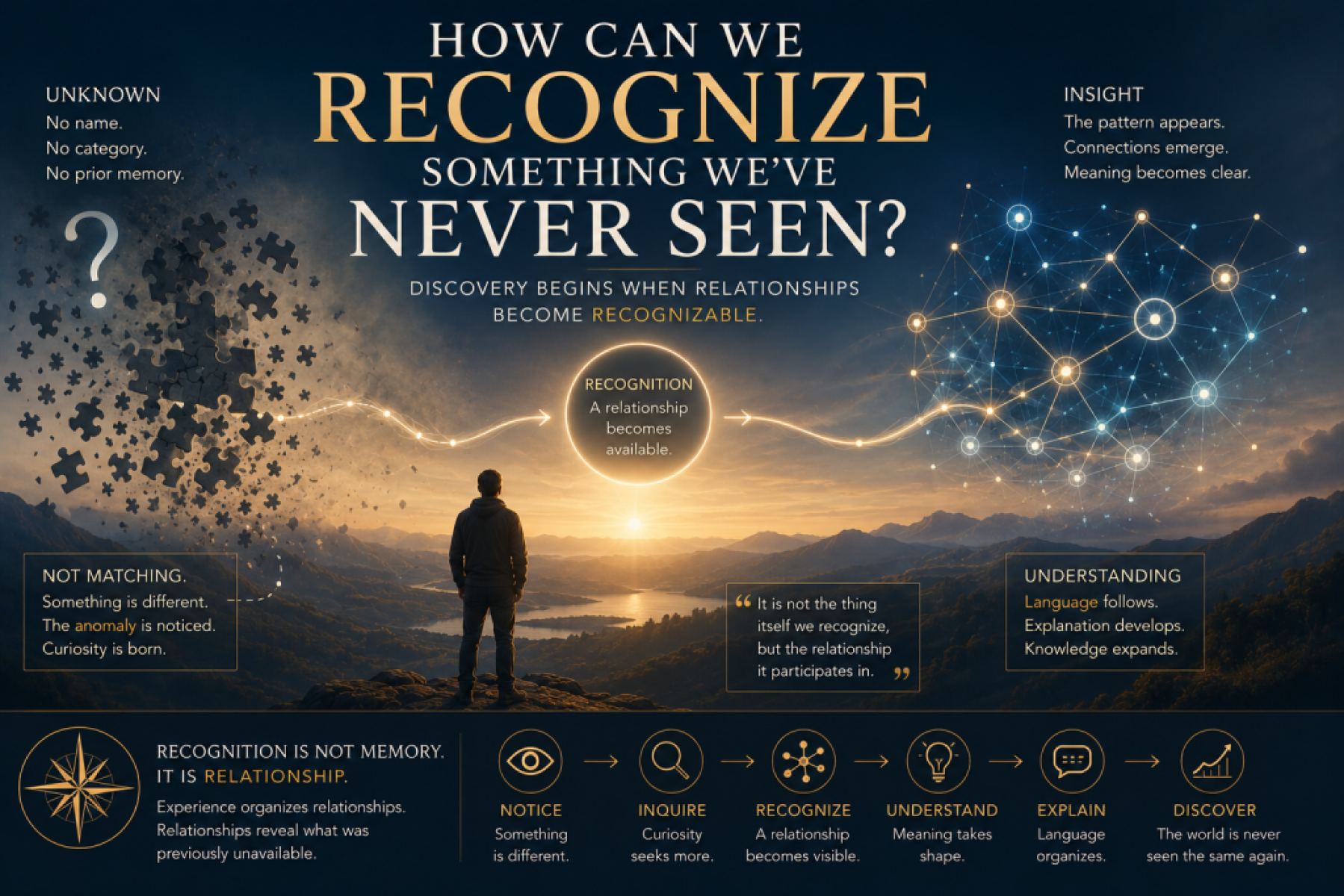
Recognition & Knowing begins with a different assumption: knowing is not the accumulation of information—it is the stabilization of recognition. Information can be collected indefinitely, but genuine understanding emerges when underlying relationships become sufficiently clear that alternative interpretations naturally begin to disappear.
Executives, investors, educators, researchers, scientists, and professionals encounter this transition repeatedly. A complex problem suddenly becomes obvious. A pattern hidden for years becomes impossible to ignore. A difficult decision resolves itself as the surrounding context becomes more coherent. Although the circumstances differ, the experience is remarkably consistent: recognition changes not only what becomes visible, but what becomes possible.
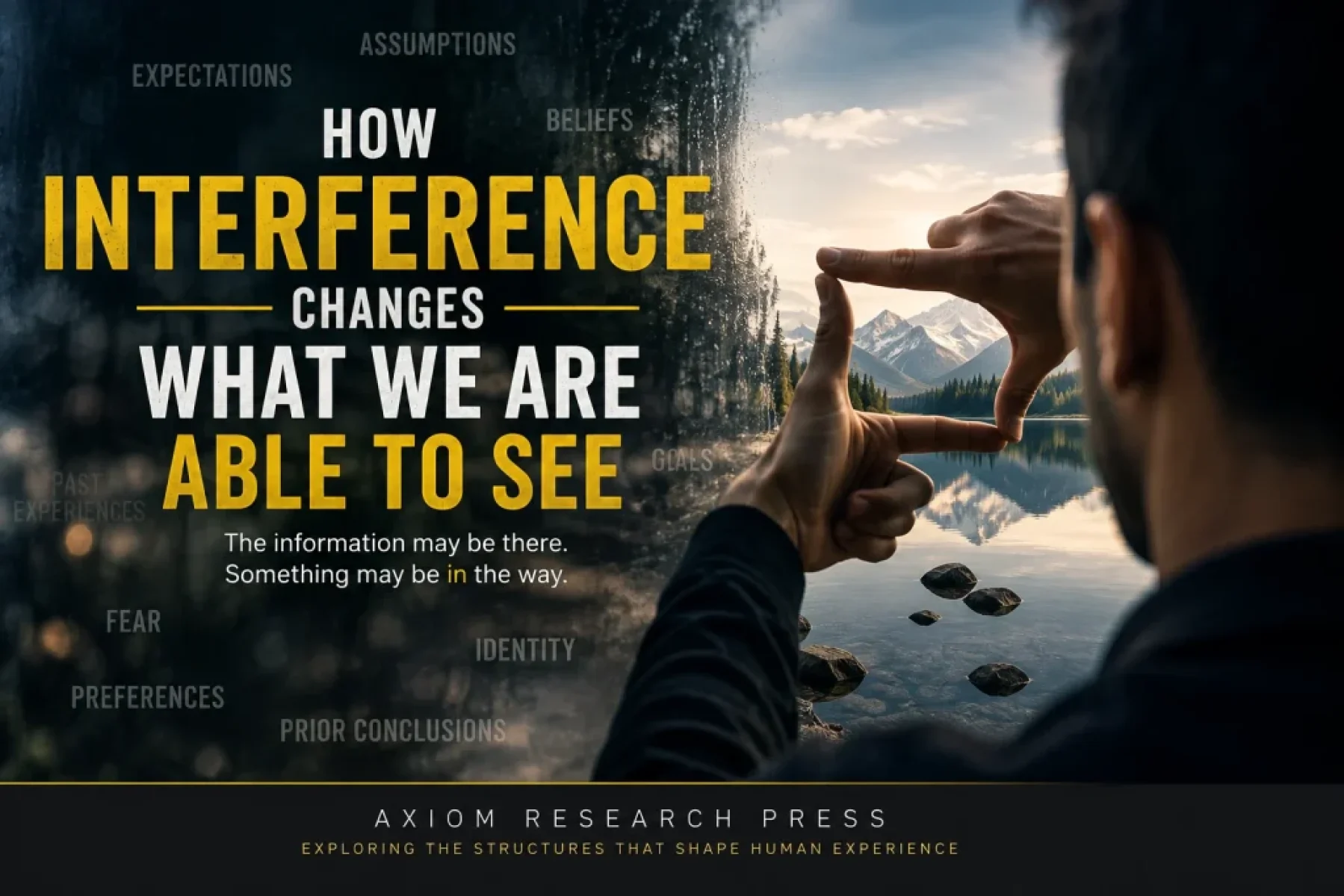
The articles in this section examine how recognition develops across organizations, markets, learning, technology, science, and human experience. Each article investigates one expression of a broader principle—that understanding does not arise from forcing conclusions, but from progressively removing interference until the underlying structure becomes unmistakable.
This perspective transforms the nature of learning itself. Rather than asking how more information can be acquired, it asks what prevents recognition from occurring. Complexity often diminishes not because reality becomes simpler, but because relationship becomes increasingly visible. As recognition stabilizes, knowing follows naturally—not as certainty imposed from outside, but as coherence discovered within the structure itself.
Recognition is never the end of the journey. Once something becomes genuinely known, an even deeper question emerges.
How does recognition expand access to information, opportunity, intelligence, and possibility?